This chapter is from Module 1 Measurement in Science. This post provides you complete answer of all intext and terminal questions given in the Measurement in Science and Technology.

Our experienced teachers have provided easy and accurate answers to all questions that will help you complete your assignments. You can also solve worksheet -1 of this chapter on the basis of knowledge you gain.
Measurement in Science and Technology-Overview
This chapter explains the significance of measurement in daily life. This chapter we will find the answer – why do we need measurement? How do we measure? And other scientific methods.
Intext Questions 1.1 with Answers
Q 1. Define the term measurement by giving two examples.
Answer
Measurement is a process in which we compare an unknown quantity with a known standard unit. This allows us to quantify physical quantities like length, time, mass etc.
Examples
1. Using a ruler or inch tape to measure the length of object.
2. Using clock to measure time.
Q 2. What is a unit?
Answer
It is a standard quantity used to measure and express physical quantities and it also provide the magnitude of any measured quantity.
For examples – The unit of length is meter and the unit of mass is the kilogram.
Q 3. List the essential characteristics of a unit.
Answer
A unit has following characteristics
(i) A unit must be universal means it is acceptable worldwide.
(ii)The unit should be reproducible in any laboratory with accurate measurement.
(iii) A unit must be convenient.
(iv)It should be understood by all people all over the world.
Intext Questions 1.2 with Answers
Q1. Name the smallest unit of length during the Chandragupta Maurya period.
Answer
The smallest unit of length during the Chandragupta Maurya period is ‘1 Parmanu’.
Q2. List the parts of human body which can be used for measurements.
Answer
Following parts of human body can be used for measurement specially for length
(i) Finger(angul)
(ii) Handspan(palm)
(iii) Foot
(iv) Steps(for pace)
(v) Cubit
(vi) Arm
Q3. Why cannot the parts of human body be used for accurate measurement?
Answer
The parts of human body cannot be used for accurate measurement because the part of body vary from person to person and cannot be trusted worldwide.
Q4. In which period was ‘gaz’ introduce as a unit to measure length?
Answer
‘gaz’ was introduce during the time of Moghul emperor Akbar.
Intext Questions 1.3 with Answers
Q1. Differentiate between base unit and derived units.
Answer
Base units – The fundamental units that define physical quantities independently. These are only seven.
Example – (i) meter for length (ii) kilogram for mass
Derived units – The units that are derived from base units by mathematical calculations are called derived units.
Example –
(i) Newton for force (N)= kg.m/s2
(ii) Pascal for pressure = N/m2
Q2. What is the difference between mass and amount of a substance?
Answer
|
S.N. |
Mass |
Amount of |
|
1 |
The amount of |
The number of |
|
2 |
It is a constant |
It depends upon |
Q3. Drive the unit of Pressure (Pressure= Force/Area)
Answer
Pressure is defined as force applied per unit area.

Now we place the unit of force and area in
the formula
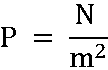
The unit of Pressure is N/m2 which is called Pascal (Pa). So, the unit of Pressure is ‘Pascal’.
Q4. Which term of measurement is commonly used by the announcer of your favourite radio programme?
Answer
Radio programme is broadcast as ‘waves’ and measured in ‘Hertz (Hz).
Q5. Observe a bulb/tube light at your home for the unit measurement written on it. Form table 1.3 find out the physical quantity it measures?
Answer
The unit on bulb/tube light written is ‘Watt’. The physical quantity is “power’ which is measured in Watt.
Q6. Veena, Mohindar and Alam went to market. Veen brought milk with a litre measure, Mohindar brought ribbon by a measuring mark on the table and Alam brought vegetables using stones. Which of them did not use the appropriate measurement while purchasing goods? Explain while given the names of right measurement.
Answer
Veena used appropriate measurement buying milk in litres and this is correct unit for measuring liquids.
Mohindar and Alam did not use correct standard units.
Mohindar brought ribbon measuring it by mark on table while standard unit is meters or centimetres.
Alam brought vegetable measuring by stone while standard unit is kilogram or gram.
Intext Questions 1.4 with Answers
Rewrite the following measurement of length using suitable SI prefixes.
(i) Effective radius of a proton ; 1.2 ×10⁻¹⁵m ……..
(ii) Radius of human red blood cell; 3.7 ×10⁻⁶m……
(iii) Radius of our galaxy; 6 × 10¹⁹m………
Answer
(i) Effective radius of a proton is 1.2fm
1fm = 10-15m
(ii) Radius of a human red blood cell is 3.7µm
1 micrometre (µm) = 10-6 m
(iii) The radius of our galaxy is 60 Em
Terminal Exercise with Answers
Q1. Which of the following is not an SI unit?
A.Metre
B.Pound
C.Kilogram
D.Second
Correct answer – (B) Pound
Q2. If the mass of a solution in 10µg it is the same as
A.10-6g
B.10-12g
C.10-9g
D.10-3g
Correct answer – (A) 10-6g
Q3. Indicate whether the following statements are True or Flas. Write T for true and F for false.
(i) SI units are arbitrary
(ii) 1mm2 =10-3m2
(iii) 10-15g = 1mpg
(iv) SI unit for pressure is Pascal
Answer
(i) SI units are arbitrary- False
(ii) 1mm2 =10-3m2 – Ture
(iii) 10-15g = 1mpg – False
(iv) SI unit for pressure is Pascal –Ture
Q4. Represent the following measurements by using suitable SI prefixes
(i) 2 ×10⁻⁸s
(ii) 1.54 × 10⁻¹⁰m
(iii) 1.98 ×10⁻⁶ mol
(iv) 200000kg
Answer
(i) 2 ×10⁻⁸s – 20 ns (nanoseconds)
(ii) 1.54× 10⁻¹⁰m – 154pm(picometers)
(iii) 1.98 ×10⁻⁶ mol – 1.98µmol (micromoles)
(iv) 200000kg – 200Mg (megagrams) or 0.2 Mega kg
Q5. Give the SI units used while buying
A.Silk ribbon
B.Milk
C.Potatoes
Answer
A. Silk ribbon – meter
B. Milk – litre
C. Potatoes – kg
Q6. Give the common unit to measure our body temperature and write its SI unit.
Answer
Common unit for measuring body temperature is Fahrenheit (ºF) and degree Celsius (ºC). It SI is Kelvin (K)
Q7. What are the advantages of SI units?
Answer
These are the advantages of SI units-
(i) These are universal units.
(ii) One unit is for one physical quantity.
(iii) It is well defined.
(iv) It is scientific system.
NIOS Class 10 Science and Technology Solutions(212)
|
Chapter |
Chapter Name |
|
1 |
|
|
2 |
|
|
3 |
|
|
4 |
|
|
5 |
|
|
6 |
|
|
7 |
|
|
8 |
|
|
9 |
|
|
10 |
|
Related Topics
1. Science and Technology Worksheets Solutions Set 1
2. Science and Technology Worksheets Solutions Set 2