This worksheet 16 contains questions based on Chapter 16 Electrical Energy with
complete answers.
.png "NIOS Class 10 Science Worksheet 16 Questions Answers – Electrical Energy")
This post explains the answers of questions given in the worksheet including
explanation, diagrams. These solutions will help you complete your assignments and TMA also.
Electrical Energy Worksheet 16 Solution
A complete solution of Questions given in the worksheet 16 of Electrical Energy of
NIOS Class 10 Science.
Q1. Bring a plastic comb near a piece of paper and write down your observations. After that comb your dirty hair with comb and bring the comb close to small pieces of paper, write down your observations. You will notice that the small pieces of paper are attracted towards the comb in second case. Do you know why this happen? Explain the phenomenon.
Answer
When a plastic comb is brough near small pieces of paper, nothing happens.
But when we comb our dry or dirty hair and then bring the comb near the pieces of papers, they get attracted towards the comb.
This happens because rubbing the comb with dry hair produces static electricity. The comb becomes electrically charged due to friction.
A charged body can attract small, light objects like bits of paper. The paper pieces are neutral but when the charged comb is brought near them, opposite charges are induced on the paper causing them to move towards the comb.
Thus, this phenomenon is called frictional electricity or static electricity.
Q2. Perform simple activities to demonstrate the existence of charges and forces between them. On the basis of your observation infer the basic properties of electric charges. Also explain what will happento the normal flow of tap water when a charged rod is brought near it.
Answer
We can perform simple activities to demonstrate the existence of electric charges and the forces between them.
Activity: Charging a straw
(i) Take clean plastic straw and bring it near small pieces of paper but no effect is seen.
(ii) Now rub the straw with a piece of paper of your dirty hair and bring again near the paper again. The paper pieces get attracted.
Inference: Rubbing produces electric charge on the straw and a charged body can attract light objects.
Activity: Charging two similar objects
(i) Suspend a straw with thread.
(ii) Rub another straw with paper and bring it near the suspended straw. The suspended straw gets attracted.
(iii) Now we rub both the straw with the same material and bring near but they repel each other
Inference: Unlike charges attract each other and like charges repel.
These activities show the presence of electric changes and forces between them.
Effect on a stream of tap water
When a charged rod is brought near a thin stream of flowing tap water.
The water stream bends towards the charged rod.
Reason
Water molecules are polar in nature; they have partial positive charge and partial negative charge. When a charged rod is brough near water, opposite charges in water get attracted towards the rod.
That’s why water stream bend toward the rod.
So, the deflection of water proves the existence of electric chare and the force it exerts.
Q3. If a charge, q1 is placed at a distance ‘r’ from a similar charge q2 as shown in figure below, calculate the magnitude of the force of attraction or repulsion between two points charges.Also state how will the force between two small electrified
objects vary if the charge on each of the two particles is doubled and
separation is halved?
Answer
Force between two-point charges
According to Coulomb’s law, the force F between two-point charges q1 and q2 separated by a distance r is
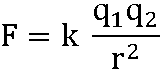
Where
K= 9 ×10⁹
Nm2C-2
F is the electrostatic force
The force is repulsive for like charges and attractive for unlike charges
Effect of Double charge and half distance
Let initial force be
Now both charges are doubled – 2q1 2q2
Distance is halved

New force F1
F1 =16F
So, when the charges are doubled and the distance is halved, the new force becomes 16 times of the original force
Q4. What do you understand by the term Electrostatic Potential and Potential Difference?
Answer
Electrostatic Potential
The amount of work done in bringing a unit positive charge from infinity to the point in an electric field is called electrostatic potential.
If ‘W’ work is done in bringing a charge ‘q’ from infinity to a point in electric field then the potential is ‘V’

Its SI unit is Volt and it is a scalar quantity.
Potential Difference
The amount of work done in moving a unit positive charge from one point to another in electric field is called potential difference.
If W is the work done in moving charge q from point C to point B then
The SI unit of potential difference is Volt. It is measured by voltmeter.
Q5. All of us are familiar with electrical appliances/gadgets like a bulb, tube, fan or a heater’s coil which are based on the movement of charges flowing through a metallic wire carrying electric current. Define electric current. Mention the instrument to measure electric current and SI unit of electric current.
Electric current
Electric current is the rate of flow of electric charges through a conductor.
Instrument to measure electric current
Ammeter is used to measure electric current
Ampere is the SI unit of electric current.
Q6. Continue to Q5, how charges flow between the two ends of a wire in a circuit i.e. form one body to another body. What is the conventional direction of flow of electric current? Do the charges carry in the conductor flow in the same direction?
Answer
When the two end of a conducting wire are connected to the terminal of a cell or a battery, a potential difference is created across the wire.
The potential difference produces an electrical field
inside the conductor, which causes the charges present in the conductor to
start moving.
Free electrons are charge carriers in metallic
conductors. These free electrons move through the wire resulting in the flow of
electric current.
Conventional direction of flow of electric current
The direction of electric current is taken as the direction of flow of positive charges. So electric current is considered to flow from the positive terminal to the negative terminal of the cell through the external circuit.
No, charges in the conductor do not flow in same direction.
So conventional current flows from positive to negative terminal and actual flow of electrons from negative to positive terminal.
Q7. The external source of energy is called a cell and the combination of cells is called a battery. Observe your surroundings and list appliances/gadgets in which cell/battery is used. Also explain the phenomenon, how a cell converts chemical energy into electrical energy.
Answer
We have many gadgets and appliances that use a cell or a battery.
i. Wall clock
ii. Remote control
iii. Torch
iv. Mobile phones
v. Laptop
vi. Digital camera
vii. Calculator
viii.Toys
ix. Radio
x. Car
How a cell converts chemical energy into electrical energy
A cell contains two electrodes (Anode and cathode) and a
chemical solution called electrolyte. This solution undergo a chemical
reaction.
i. Electrons are released at the negative terminal(cathode)
ii. Electrons are attracted at the positive terminal(anode)
A potential difference (voltage) is created between the two terminals.
When we connect a wire between the terminals- (i) Electrons start moving from the negative terminal to positive terminal, this flow of electrons is called electric current.
So a cell converts chemical energy into electrical energy through a chemical reaction.
Q8. Define conductors, insulators and resistors. Observe your surroundings and list conductors and insulators.
Answer
Conductors: – The materials that allows electric current to flow easily through them are called conductors.
Examples – copper wire, iron nails, silver, graphite(pencil lead)
Insulators: – The materials that do not allow electric current to flow through them are
called insulators.
Examples: – Rubber, plastic, glass, wood, Bakelite etc.
Resistors: – A resistor is a device or material that opposes or control the flow of
electric current in a circuit.
Examples: – Nichrome, carbon, electric iron coil etc.
Q9. Explain the phenomenon why household appliances in household circuits are connected in parallel whereas the chain of small bulbs that we use for decoration on Deepawali has the bulbs connected in series. Also have three resistors of 1 Ohm,2 Ohm and 3 Ohm. Show by diagrams, how will you connect these resistors to get (a) 6/11 Ohm (b) 6 Ohm and (c) 1.5 Ohm.
Answer
Household appliances are connected in parallel because each appliance gets the same
voltage but any appliance may be switched off or on of gets fault without interference of the other. Different appliances draw different current depending on their power rating.
Decoration on Diwali has small bulbs connected in series because each bulb requires low and same voltage. All bulb glow with similar brightness when current is same.
Numerical Problem Solution
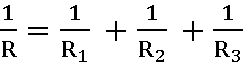
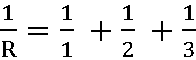
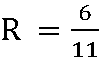
(a) To get 6/11 Ohm
All the three resistors are connected in parallel combination.

(b) To get 6 Ohm
All the three resistors are connected in series combination.
R=R1 + R2 + R3
R=1+2+3=6 Ohm
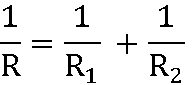
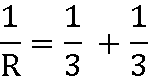
(c) To get 1.5 Ohm
We connect 1 Ohm and 2 Ohm in series and this circuit is connected in parallel with 3 Ohm resistor.
R= R1 + R2
Now we connect this 3 Ohm resistor with other 3 ohm resistor in parallel


Q10. All of us are familiar that on passing current through an electric heater, the coil of the heater gets heated and glows brightly. Do you know why this happens? Explain the phenomenon.
Answer
Whenelectric current is passes through the coil of an electric heater, the coil becomes
hot and starts glowing. This happens due to the heating effect of electric current.
The heater coil is made of a material nichrome which has high resistance. When electric current flows through this coil. The moving electrons collide with the atoms of the wire; this continuous collision convert electrical energy into heat energy.
So, the temperature of the coil increases and it becomes red hot and at very high temperature, the coil emits light and glows
brightly.
Related Topics